
Spiritual Meanings of Moaning in Sleep (Catathrenia)
Moaning during sleep, known as catathrenia, can hold spiritual significance. It may reflect emotional release, energy shifts, or spiritual awakening during rest.
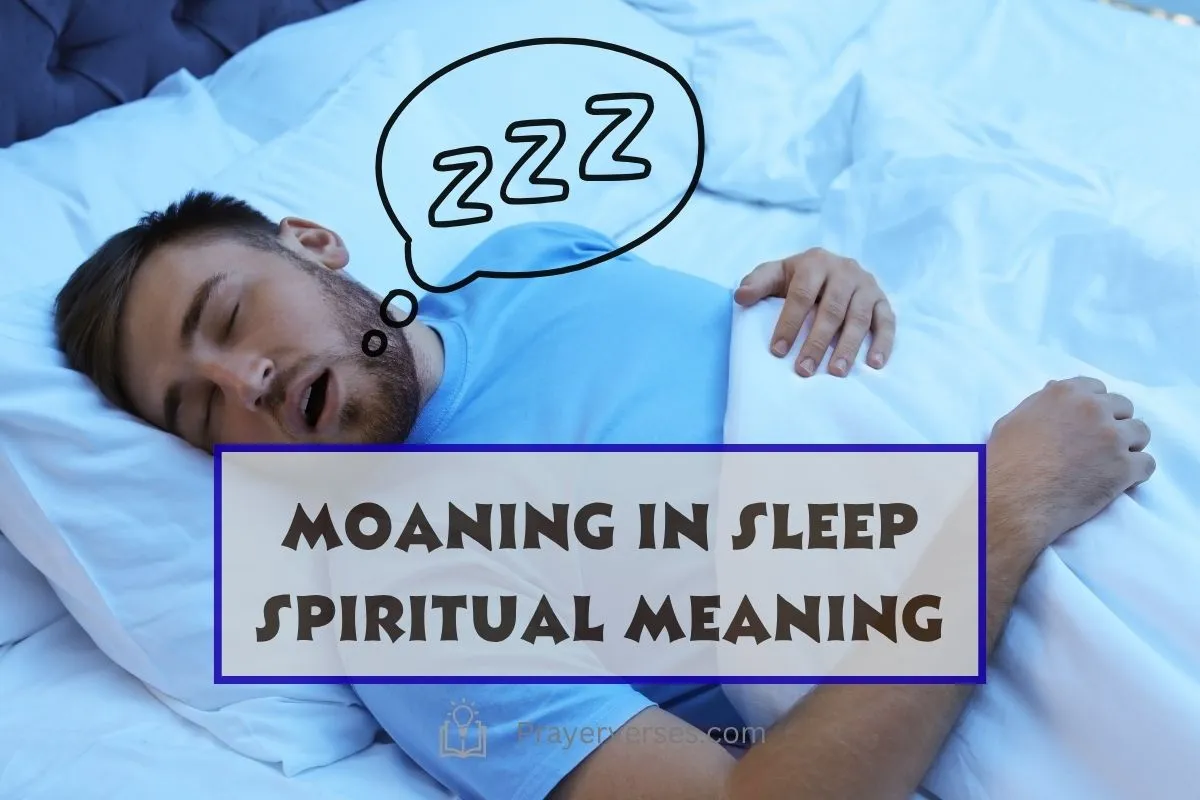
Have you ever woken up to someone moaning softly in their sleep—or realized you were the one doing it? It’s a strange, sometimes unsettling experience. The sound is somewhere between a sigh and a low groan, and it can go on for several seconds or even minutes.
Medically, this phenomenon is called Catathrenia, a type of sleep-related breathing disorder. But beyond the medical lens, many believe there’s something deeper—a spiritual message hidden within those nighttime moans.
Across cultures and spiritual traditions, sounds made during sleep—be it talking, laughing, crying, or moaning—are often thought to reveal what the conscious mind hides. They’re whispers from the soul, signals from the unseen, or even echoes of emotional and energetic cleansing. So, what does it really mean when someone moans in their sleep? Is it just a quirk of the body, or is the spirit trying to speak?
Let’s unravel both the scientific and spiritual layers of this mysterious sleep behavior.
Why People Moan in Their Sleep?
Before diving into the spiritual side, it’s helpful to understand what’s happening physically. In medical terms, Catathrenia involves prolonged groaning or moaning sounds during exhalation while asleep. It usually happens during the REM phase (the dream stage of sleep), and most people are completely unaware of it.
Some common physical or psychological reasons include:
- Restricted airflow during sleep (similar to mild sleep apnea)
- Stress or anxiety, leading to tension in the throat muscles
- Suppressed emotions manifesting through the subconscious
- Unresolved grief or trauma, expressed through sound rather than words
- Energetic release during deep dream states
While doctors tend to treat Catathrenia as harmless, many spiritual thinkers see it as the body’s way of releasing energy or communicating messages from the subconscious realm. In other words, moaning in sleep might not just be random noise—it could be your spirit doing some important work while you rest.
10 Spiritual Meanings of Moaning During Sleep
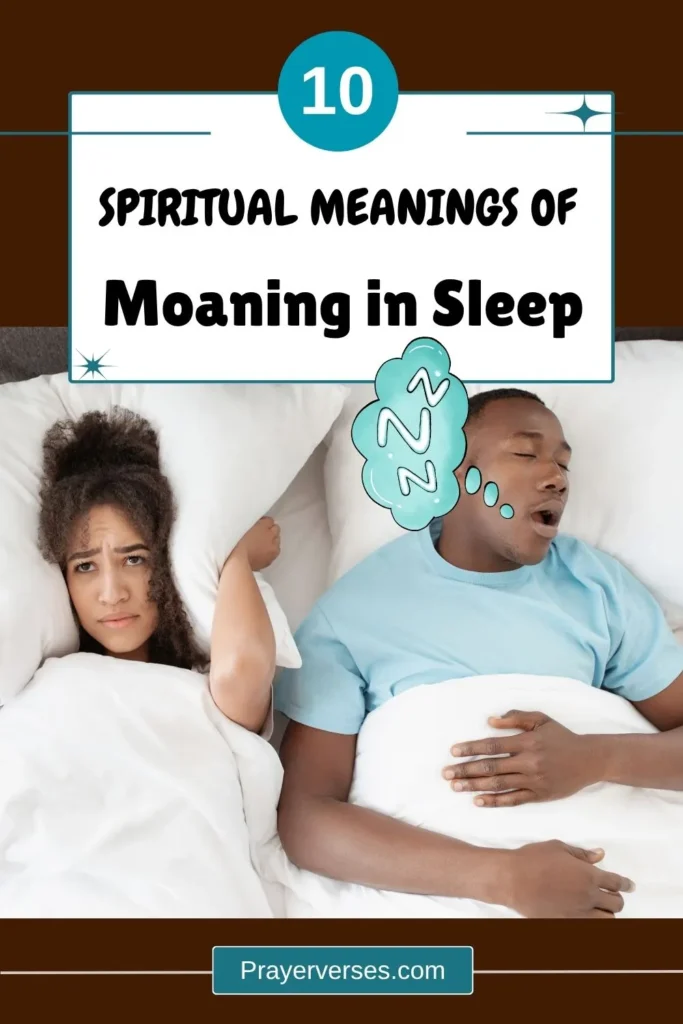
Each moan, sigh, or groan that escapes during sleep could carry a different energetic message. Below are 10 possible spiritual meanings behind this mysterious nighttime behavior.
1. Emotional Release and Healing
When someone moans in their sleep, it often signifies a deep emotional release taking place within the subconscious. During waking hours, we tend to suppress painful feelings—anger we can’t express, grief we don’t have time to process, or disappointments we quietly carry. But when the conscious mind finally rests, the soul begins to speak.
Moaning can be the body’s natural outlet for pent-up emotion. Just as crying releases sorrow and laughter releases joy, a low moan in sleep can symbolize your inner world exhaling its burdens. Spiritually, this sound acts like a valve that opens during the night, letting out what the heart has held in silence.
If you’ve been going through a difficult period—loss, heartbreak, or stress—these sleep moans may be signs that your spirit is healing itself. In dream states, the soul isn’t bound by logic or restraint; it’s free to release pain energetically. You might wake up lighter, calmer, or strangely relieved, without realizing why. That’s because healing has occurred in the unseen realm.
In essence, moaning in your sleep can be the spiritual equivalent of a soul sighing in relief—a quiet moment of restoration where emotional tension finally finds its way out.
2. Communication from the Soul
Sometimes, moaning in sleep is not about pain at all—it’s about communication. When your conscious mind switches off, the veil between the physical and spiritual worlds becomes thinner. In this vulnerable and receptive state, your soul begins to express itself freely, often through sound.
A moan may represent a wordless message from your higher self. It could be gratitude, longing, surrender, or connection—feelings too profound for language. In mystical traditions, these sounds are sometimes described as the “breath of the soul,” expressing emotions that words could never capture.
If you’ve been on a spiritual journey or have felt disconnected from your inner self lately, sleep moaning might be your spirit’s way of re-establishing dialogue with your physical being. It’s like your soul saying, “I’m still here. Listen to me.”
You might even find that after such nights, you wake up with unexpected clarity, peace, or inspiration. That’s no coincidence. When the soul speaks and the body listens, alignment begins. These subtle nighttime expressions are proof that your spirit is alive, active, and in conversation with the Divine.
3. Energetic Purification
Another powerful interpretation is that moaning in sleep signifies energetic cleansing—a deep purification of your spiritual body. Just as the physical body detoxifies through rest, your energy field also sheds heaviness and stagnant frequencies during sleep.
Think of moaning as sound therapy for the soul—a vibrational release that clears away emotional toxins. You may have absorbed stress, envy, grief, or fear from your environment, and your spirit uses sound as a tool for purification. Each moan vibrates through your energetic centers, unblocking what’s been stagnant.
In holistic traditions, certain tones are known to correspond to specific chakras. For instance, deep moaning may resonate with the throat chakra (Vishuddha)—a center tied to self-expression and truth. If you’ve been holding back your voice or concealing emotions, your subconscious might release sound as a way to restore energetic flow.
After such nights, people often feel emotionally lighter or experience vivid dreams that seem cleansing or symbolic. That’s your spiritual body resetting itself, much like emotional spring cleaning. So instead of seeing moaning as odd or alarming, it can be viewed as a healing vibration moving through you, preparing your energy for balance and renewal.
4. Astral or Spiritual Encounters
Sometimes, moaning during sleep occurs when your consciousness travels beyond the physical realm. During deep sleep, especially the REM phase, the spirit can temporarily detach from the body to explore the astral plane. This experience, known as astral projection or spiritual journeying, is a natural phenomenon where the soul interacts with other energies, dimensions, or beings.

If you’ve ever woken up from a dream that felt too real—like you were actually somewhere else—it’s possible your moans during that sleep were echoes of those experiences. The body remains on the bed, but the spirit moves, perceives, and sometimes reacts. These subtle sounds could be responses to spiritual frequencies, communication with guides, or even emotional reactions to what the soul is witnessing beyond the veil.
In esoteric teachings, such moaning can also occur when you’re in contact with divine beings, ancestors, or angelic energies. These encounters can be intense, not because they’re negative, but because they carry high vibrations that the physical body isn’t used to. The moaning may simply be the body’s natural way of adjusting to those elevated frequencies.
If this resonates, consider keeping a dream journal. Write down what you remember upon waking—symbols, emotions, or sensations. Over time, you might notice patterns that reveal deeper meanings about your spiritual connections during sleep.
5. Repressed Desires or Unspoken Feelings
Moaning in sleep can also point toward hidden emotions or unmet desires that you haven’t consciously expressed. It might not be about physical desire alone—it could represent creative frustration, emotional hunger, or spiritual longing. Your soul could be trying to voice what your waking self keeps silent.
Many people live with unspoken truths—dreams they never chase, emotions they bury, or love they never confess. These emotions don’t disappear; they simply retreat into the subconscious, where they seek expression through dreams, movements, or sounds. The moaning, in this sense, becomes the whisper of the silenced self.
Spiritually, this can be a wake-up call. Your inner voice might be asking you to acknowledge what you’ve been avoiding—a decision, a calling, or even self-compassion. Perhaps you’ve been overworking, denying your creativity, or ignoring your emotional needs. The sound is your body’s way of saying, “It’s time to feel again.”
If you notice recurring moaning during emotionally charged periods, it might help to meditate or journal about what’s missing or unfulfilled in your life. Ask yourself gentle questions like:
– What part of me have I silenced?
– What do I truly need that I’m not giving myself?
By addressing these hidden emotions, the sounds often fade—because the soul no longer needs to speak through them. What was once a moan of repression transforms into a voice of awakening.
6. Signs of Spiritual Awakening
If you’ve recently become more reflective, curious about life’s deeper meaning, or drawn to meditation and self-discovery, your moaning during sleep might be a sign of spiritual awakening. This phase often begins quietly — a subtle shift in energy where your soul starts to remember its purpose.
During awakening, the body and spirit undergo energetic recalibration. Old emotions, limiting beliefs, and stagnant energies begin to surface and release. That release doesn’t always happen consciously; sometimes it expresses itself through the body while you sleep. The moaning you (or others) hear can be the sound of your spirit adjusting to a higher vibration — like a musical instrument being tuned to a new frequency.
Many who experience awakening describe nights filled with vivid dreams, restlessness, or emotional surges. These are all signs of energetic expansion. The moaning, then, becomes a spiritual byproduct — the resonance of your transformation.
If this resonates, don’t fear it. Instead, embrace it as a sacred sound of growth. Your soul is shedding layers of fear and illusion to reveal a more authentic self. Ground yourself through meditation, prayer, or nature walks. With time, you’ll notice that as your consciousness balances, the nighttime sounds quieten, replaced by a deeper sense of inner peace.
7. Protection from Negative Energies
In many spiritual traditions, sleep is considered a vulnerable state — the soul drifts beyond conscious control, and the energy field opens wider than usual. Moaning in sleep can sometimes act as a protective mechanism, where the body unconsciously produces sound to create a spiritual boundary around itself.
The vibration of your moan carries energy — it’s a frequency that may repel lower entities or disruptive energies. Think of it as your spirit’s alarm system, gently sounding off when something in your energetic space feels intrusive. The moan itself becomes a spiritual shield, signaling to unwanted energies: You can’t enter here.
In some cultures, such as in African or Native spiritual practices, these involuntary sounds are even seen as voices of ancestral guardians, protecting the dreamer through sound. The moaning body becomes an instrument played by higher forces to maintain energetic harmony through the night.
If you notice moaning during stressful periods or after emotionally heavy days, it may simply mean your spirit is defending itself while your mind rests. You can enhance this protection by:
- Saying a short prayer or affirmation before bed
- Visualizing a white or golden light surrounding you
- Keeping your sleep environment calm and energetically clean
So, rather than something strange or frightening, moaning can be understood as the soul’s way of maintaining safety in unseen realms.
8. Manifestation of Spiritual Burdens
Sometimes, moaning in sleep indicates that your soul is carrying too much weight — spiritual, emotional, or energetic. It’s as if your inner world is whispering, “I’m tired… I need rest.” The sound becomes an expression of spiritual fatigue.
If you’ve been overextending yourself — giving too much, worrying too deeply, or trying to hold everything together — your subconscious may use moaning to release pressure from your energy field. You might not be consciously aware of how much stress you’ve internalized, but your soul feels it. Sleep is the only time it can freely exhale.
Spiritually, these moans might also signal a need for surrender. Perhaps you’ve been trying to control things beyond your reach — outcomes, people, or situations. Your soul, knowing the futility of resistance, releases a sound of letting go. In that moment, the moan becomes a prayer, an unspoken request for renewal and mercy.
If this meaning fits your experience, try to honor your limits in waking life. Rest more deeply, pray more honestly, and allow yourself to simply be. By doing so, you give your soul what it’s been asking for — space to breathe. With time, the moaning will ease, replaced by inner stillness and relief.
9. Connection with Ancestral Energies
Another profound interpretation of moaning in sleep relates to ancestral connection. In many spiritual paths — from African spirituality to Eastern mysticism — the veil between the living and the ancestors grows thin during sleep. The moaning sound may symbolize your soul’s response to ancestral presence or communication.
These ancestral energies often reach out through dreams, symbols, or sensations. Moaning might be your subconscious reacting to ancestral healing or guidance taking place in the unseen world. You may not consciously remember the encounter, but the sound is evidence that a sacred exchange has occurred.
In some cases, this may mean your ancestors are helping to cleanse generational pain or guiding you through karmic lessons. They might be releasing emotions or burdens that have traveled through your lineage — pain that now finds expression through you.
If you feel drawn to this meaning, you can honor the connection by:
- Lighting a candle or incense in remembrance of your ancestors
- Offering a short prayer of gratitude before sleep
- Journaling any dreams or emotions that arise afterward
This gentle practice transforms moaning from something mysterious into something sacred — a spiritual conversation between generations, carried out through the quiet language of the soul.
10. Expression of Spiritual Pleasure or Divine Union
Not all moaning in sleep stems from pain or struggle. Sometimes, it reflects something far more transcendent — the bliss of divine connection. In mystical traditions, the human body often responds physically to spiritual ecstasy. When the soul merges with divine energy in deep meditation, prayer, or dream states, it can trigger sensations of rapture, gratitude, or inner joy that manifest as moans or sighs.
This phenomenon has been described in the writings of Sufi mystics, Christian saints, and Buddhist monks alike — individuals who reached profound states of union with the Divine. In those moments, the boundaries between spirit and Source dissolve, and the body reacts naturally, expressing what words cannot: a moan of spiritual pleasure.

If your moaning in sleep feels peaceful or blissful — not strained or distressed — it might represent a sacred communion. Your soul could be visiting higher planes of light, aligning with divine frequencies that fill you with warmth and love. Upon waking, you might feel unusually serene, inspired, or full of gratitude.
This meaning reminds us that sleep isn’t just rest; it’s a spiritual journey. Sometimes, moaning is the soul’s quiet “Amen” — a sound of surrender to the beauty and power of divine presence.
Cultural and Religious Views
The interpretation of moaning in sleep varies across cultures and belief systems. Let’s look at a few perspectives.
In Eastern philosophies, moaning is often associated with energy movement through chakras. When a specific chakra (like the throat or heart chakra) is blocked, emotional sounds may emerge during rest. These are not random but signals that energy is trying to flow freely again.
In African and Indigenous traditions, moaning or groaning in sleep may be seen as a form of spirit possession, visitation, or ancestral communication. The sound acts as a bridge between the spiritual and physical realms. People experiencing it are often believed to be spiritually sensitive or gifted with intuitive abilities.
In Islamic belief, moaning during sleep is not directly addressed, but night sounds can sometimes be associated with unconscious prayers or duʿāʾ (supplications) emerging from the heart. Sleep is considered “a minor death,” and the soul’s movements during this time are deeply spiritual.
In Western esoteric thought, particularly in mystical Christianity or spiritual psychology, moaning in sleep can represent inner travail—a form of “soul labor.” It’s the sound of transformation, where the spirit wrestles with inner pain to emerge stronger and freer.
Every culture, in its own way, acknowledges that the sleeping body is more than just resting—it’s communicating.
Biblical Meanings of Moaning, Groaning, and Catathrenia
The Bible often uses moaning and groaning as metaphors for deep spiritual emotion. While it doesn’t speak about sleep moaning directly, the symbolism behind such sounds is powerful.
In Romans 8:26, it says:
“The Spirit himself intercedes for us through wordless groans.”
This verse suggests that groaning is a spiritual language, used when words fail. If you moan in your sleep, it could symbolize your spirit praying or communicating with God in a language deeper than words.
Similarly, in Psalm 38:9, David cries out,
“Lord, all my desire is before you; my groaning is not hidden from you.”
This reveals how moaning or groaning is not just a sign of pain—it’s a sign of divine intimacy. God hears even the unspoken sounds of the soul. Spiritually, your nighttime moans might be a form of prayer or emotional surrender that your conscious self isn’t aware of.
Other biblical references also link groaning to deliverance, rebirth, and intercession. For example:
- Exodus 2:23-25 – The Israelites’ groaning reached God, leading to their liberation from Egypt.
- Lamentations 1:22 – Groaning reflects grief but also cleansing.
- John 11:33 – Jesus “groaned in the spirit” before performing a miracle.
So in a biblical sense, moaning can mean that your spirit is in the process of healing, praying, or calling for divine help. Far from being a bad sign, it could be a sacred conversation between your soul and God.
Is Moaning in Sleep a Good or Bad Omen?
Spiritually speaking, moaning in sleep is rarely a bad omen. It’s more of a signal—a reflection of what’s happening within your energy field or emotional body.
Positive interpretations include:
- Spiritual purification: Your soul releasing burdens
- Protection: Energy field strengthening during vulnerable sleep states
- Healing: Emotional wounds being processed subconsciously
- Connection: Divine or ancestral presence communicating comfort
However, if moaning is accompanied by distress, nightmares, or fatigue, it could indicate spiritual imbalance—a sign that your body, mind, and soul need rest, prayer, or grounding.
You might try:
- Burning sage or incense before bed to cleanse your space
- Praying or meditating for spiritual protection
- Listening to calming frequencies or reciting affirmations
- Journaling any dreams or feelings that come up
In short, moaning isn’t a curse or a bad omen. It’s a message, and like all spiritual signs, it invites awareness rather than fear. The key is to observe, not overreact. Ask yourself: What might my soul be trying to express that my voice hasn’t said?
Final Thoughts
Moaning during sleep—Catathrenia—might look like a strange habit or even a sleep disorder on the surface, but spiritually, it opens a fascinating window into the unseen. It’s the sound of the soul breathing, releasing, and communicating beyond language.
Whether it’s an act of healing, a call from your higher self, or a sign of divine connection, one thing is clear: your spirit keeps working, even while your body sleeps.
So next time you or someone you love moans in their sleep, don’t rush to label it strange. Pause for a moment. Listen. There might be a story unfolding beneath the silence, a sacred sound that speaks the language of the soul—a language beyond words, where even a moan becomes a prayer.
You Might Also Like
1) Spiritual Meanings of Sleeping in the Fetal Position
2) Spiritual Meaning of Smelling Coffee When There is None
3) Spiritual Meanings of Right and Left Hands & Symbolism
4) Spiritual Meanings of the Black and Red Color Combination
5) 12 Spiritual Meanings of Sleep Talking & How to Stop It