
Spiritual Meaning of Mirror and Its Symbolism
Mirrors symbolize more than reflection—they reveal truth, energy, and the hidden layers of the soul. This guide delves into their deep spiritual meanings and symbolism.
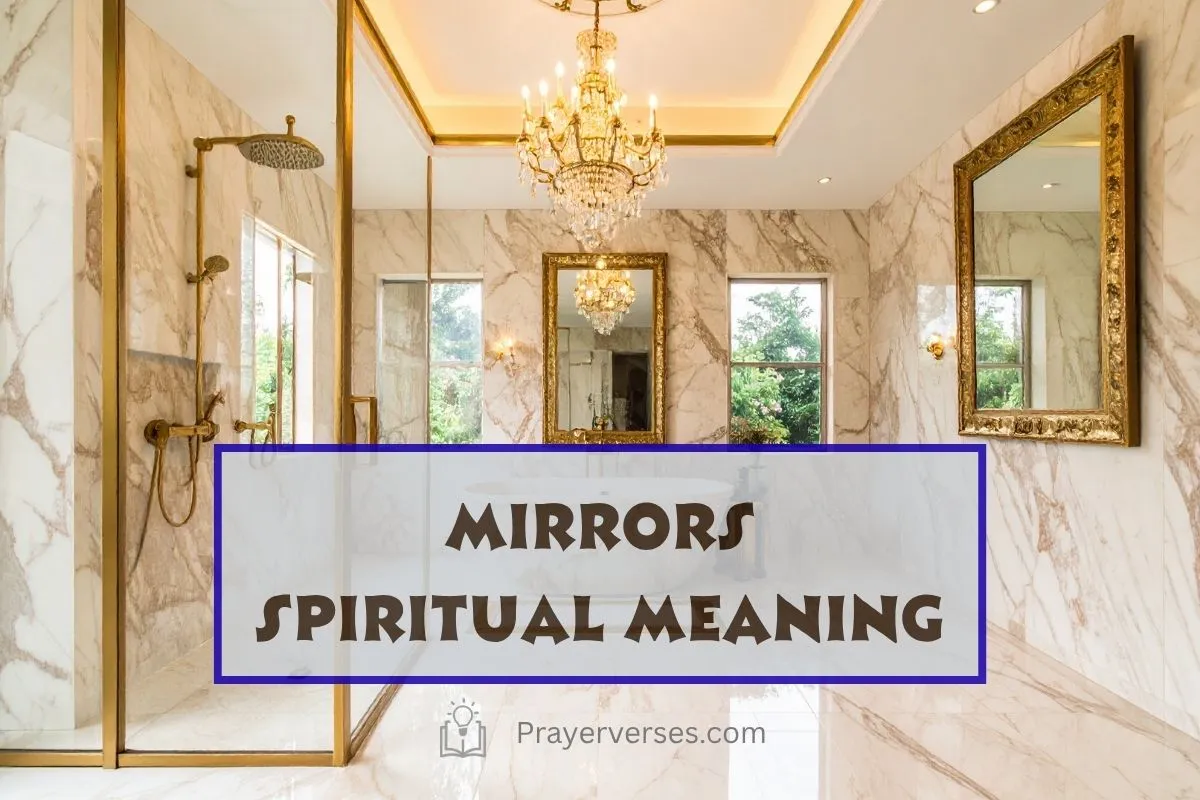
Have you ever stood before a mirror and felt that strange moment of connection—not just with your reflection, but with something deeper? Mirrors are more than tools for checking our appearance. Spiritually, they’ve long been seen as portals between worlds, gateways to self-awareness, and symbols of truth and illusion.
Across different cultures and belief systems, the mirror holds a fascinating duality—it can reveal clarity or distort reality, reflect the soul or trap energy.
From ancient myths to modern dream interpretations, mirrors have carried profound spiritual weight. In this post, we’ll dive deep into what mirrors truly symbolize, uncover their spiritual meanings, and explore how they connect to self-perception, energy, and the divine.
What Does a Mirror Symbolize?
At its core, a mirror symbolizes reflection, truth, and self-awareness. It’s a physical object that reflects what stands before it, but spiritually, it reflects our inner state—our emotions, soul, and hidden thoughts.
Mirrors can serve as both teachers and tests. They can reveal who we truly are, stripping away illusions and showing us our spiritual reality. But they can also deceive when our perception is clouded by ego or fear. This is why, in many traditions, mirrors represent both truth and illusion—the seen and unseen aspects of existence.
Here are some of the most common symbolic interpretations:
- Truth and self-realization – Mirrors reflect things as they are, reminding us to look honestly at ourselves.
- Clarity and awareness – They clear confusion, allowing spiritual insight to emerge.
- Duality and illusion – Just as a mirror can distort, it reminds us that not everything we see in life is as it seems.
- Energy reflection – Many spiritual practices believe mirrors can bounce energy, both positive and negative.
In essence, mirrors act as spiritual gateways—bridging the physical and metaphysical, the conscious and the unconscious.

12 Spiritual Meanings of Mirrors
The mirror’s spiritual meanings reach far beyond its surface reflection. Each meaning carries layers of insight into how mirrors connect our physical reality with the unseen world of consciousness and energy.
1. Reflection of the Soul
When you stand in front of a mirror, you’re not just seeing your body—you’re encountering your soul. The reflection staring back is more than physical form; it’s a window into your inner being. Many spiritual traditions believe mirrors have the power to reveal your energetic truth—your emotions, intentions, and spiritual light.
The mirror doesn’t judge. It shows everything exactly as it is, whether beautiful, messy, or raw. That’s why spiritually, mirrors are often seen as tools for self-awareness. When used consciously—say, during meditation or inner reflection—they help you confront parts of yourself that you’ve ignored or suppressed.
There’s also a mystical belief that mirrors can capture fragments of the soul’s essence, which is why breaking or damaging them was once considered spiritually dangerous. On a higher level, though, a mirror invites us to meet our authentic selves—to stop running from our truth and embrace our full spiritual identity.
When you truly look into a mirror, ask yourself: What part of my soul is being reflected right now?
2. Truth and Honesty
Mirrors symbolize absolute truth—they show things as they are, not as we wish them to be. Spiritually, this represents the importance of honesty with oneself. It’s easy to deceive others, but the mirror makes it nearly impossible to hide from your own reflection.
This symbolism goes deeper than physical truth. A mirror can reflect the truth of your emotions, thoughts, and spirit. If you look into it with awareness, you may notice how your energy shifts depending on your mental state. Some people even use mirrors for spiritual journaling—staring softly into their reflection while asking questions about their life, goals, or fears. The answers often surface from deep within.

The mirror teaches that truth is light—it illuminates everything. But truth can also be uncomfortable. Spiritually, the mirror’s honesty encourages you to accept your flaws without judgment, while still striving for growth. In a world filled with illusions, the mirror stands as a reminder: truth doesn’t need to be pretty—it just needs to be real.
3. Portal Between Worlds
In ancient and esoteric traditions, mirrors were often seen as gateways between the material and spiritual realms. They were believed to act as thin veils separating the physical world from other dimensions. That’s why mirrors have always carried a sense of mystery—and sometimes, fear.
In folklore, people covered mirrors during funerals to prevent the soul of the deceased from becoming trapped inside. In other beliefs, witches or shamans used mirrors for scrying—a form of divination in which one gazes into a mirror to receive messages or visions from beyond.
Spiritually, this symbolism reminds us that the mirror isn’t just a physical object—it’s a metaphor for spiritual access. When used with intention, it can help us connect with intuition, ancestral guidance, and higher realms of consciousness.
This is also why it’s important to treat mirrors with respect. Many believe they store energy, both light and dark. Cleansing mirrors with smoke, salt water, or moonlight is a common ritual to keep their vibration clear. Think of it as cleansing a doorway between worlds—keeping only positive energy flowing through.
4. Self-Perception and Identity
A mirror shows us how we think we look—but spiritually, it can show us who we believe we are. The two are often very different.
Our relationship with mirrors often reflects our relationship with ourselves. When we love and accept who we are, the reflection feels peaceful. But when we’re disconnected from our inner truth, looking in the mirror can stir discomfort or judgment. This makes mirrors powerful teachers of self-perception and self-worth.

Spiritually, this meaning invites you to ask: Who am I beyond this reflection? The face you see is temporary, but the soul behind it is eternal. Mirrors challenge us to move beyond external appearances and connect with the essence that never changes.
In healing and self-development practices, “mirror work” has become a transformative ritual—standing before a mirror, maintaining eye contact with yourself, and affirming love or forgiveness. It’s deeply emotional but profoundly healing. When done with intention, it helps align your physical self with your spiritual identity, bridging the gap between how you appear and who you truly are.
5. Karma and Energy Reflection
Spiritually, the mirror is a perfect symbol for karma—the idea that what you send out into the world eventually comes back to you. Just as a mirror reflects your image instantly, the universe reflects your energy in time.
If you project love, compassion, and gratitude, you attract the same energy back. But if you send out negativity, anger, or envy, that too will mirror back to you. The mirror teaches this universal law visually—it’s a reminder that every thought and action has a reflection somewhere in your life.
In energy healing, mirrors are sometimes used to reflect unwanted energy away or to send healing energy back toward oneself. Placing a mirror strategically in a room is believed to balance energy flow and prevent stagnation.
The lesson here is clear: life mirrors your vibration. The world you see around you is a reflection of what exists within you. If your reflection feels distorted, maybe it’s not the mirror that needs to change—it’s the energy you’re projecting.
6. Inner Transformation
Standing before a mirror can be an act of transformation. Every time you truly see yourself—not the version others expect, but the real, evolving you—you step into spiritual growth.

Mirrors symbolize change, rebirth, and self-realization. They witness your journey from one version of yourself to another. In spiritual practice, gazing into a mirror can serve as a meditation on impermanence—reminding you that both your body and your identity are constantly shifting.
This is why some spiritual healers use mirror meditation for shadow work—facing fears, regrets, or inner wounds that need healing. When you meet your own eyes, you can’t hide from your truth. You see the parts that crave acceptance, forgiveness, or love. Through this confrontation, transformation begins.
In a deeper sense, the mirror teaches that every reflection is temporary. The person you were yesterday is gone; the one you’ll become is still forming. The mirror reflects this evolution, silently witnessing the continuous process of spiritual awakening.
7. The Illusion of Reality
One of the deepest spiritual teachings the mirror offers is the lesson of illusion. What you see in the mirror looks solid, detailed, and real—but it’s only a reflection. The same principle applies to life itself.
Many spiritual traditions—from Buddhism to mystical philosophy—teach that the world we see is a reflection of our inner consciousness, not an absolute truth. In other words, the mirror reminds us that reality is subjective. What you perceive outside often mirrors what’s happening within.
When your mind is peaceful, the world appears calm. When your thoughts are chaotic, the world feels uncertain. The mirror teaches that life is a projection—our outer experiences reflect our inner energy, beliefs, and emotions.
This symbolism encourages self-awareness. Instead of trying to fix every external problem, look inward first. If your “mirror” (life) shows distortion, perhaps it’s your perspective that needs cleaning, not the reflection.

Ultimately, the mirror becomes a teacher of spiritual clarity—inviting us to see beyond illusion and recognize that true reality exists not in reflections, but in awareness itself.
8. Protection and Warding Off Negativity
Mirrors don’t just reveal energy—they can also repel it. For centuries, spiritual practitioners and energy healers have used mirrors as tools of protection. Their reflective quality is believed to deflect harmful vibrations, evil intentions, or psychic attacks.
In feng shui, mirrors are powerful symbols of energy redirection. A properly placed mirror can reflect negative energy out of a room, invite abundance, or expand positive chi (life force energy). However, placement matters—mirrors should never directly face your bed or front door, as they may reflect away good fortune or restful energy.
Beyond cultural practices, the mirror carries a universal message of energetic boundaries. Spiritually, it reminds us to reflect negativity rather than absorb it. You can visualize a mirror-like shield around yourself, bouncing harmful words or energy away. This simple visualization strengthens your aura and keeps your energy field balanced.
Some even keep small mirrors in their homes or bags as spiritual “armor.” Whether you believe in literal energy reflection or not, the idea holds a deeper truth—protect your peace, reflect love, and don’t let negativity take root within you.
9. Connection with the Divine
In many mystical traditions, mirrors symbolize the divine reflection—the truth that we are all made in the image of the Creator, Source, or Universe. The mirror becomes a metaphor for how divine light shines through us, even when we can’t always see it clearly.
Imagine your soul as a mirror. When it’s clouded with fear, doubt, or ego, divine light can’t fully reflect. But when it’s polished through self-love, compassion, and spiritual practice, it begins to shine again—pure, radiant, and whole.

In Christian mysticism, this idea is expressed as humanity being a reflection of God’s image. In Sufism, the concept of “the mirror of the heart” teaches that the divine dwells within us; it’s only through spiritual cleansing that we can see that light reflected back.
Every act of kindness, every moment of forgiveness, and every spark of creativity is a reflection of the divine within you. The mirror, therefore, reminds you that you’re not separate from Source—you are the reflection. The divine doesn’t live somewhere distant; it lives through your eyes, your heart, your being.
10. Vanity and Illusion
On the shadow side, mirrors can symbolize vanity, obsession, and self-delusion. Myths and folklore are filled with cautionary tales of people who fell in love with their own reflection—most famously, Narcissus, who became so entranced by his mirrored image in water that he lost his life.
Spiritually, this serves as a warning. The mirror’s beauty and clarity can tempt us to focus too much on external appearance, forgetting the inner essence. It teaches that while self-love is sacred, self-obsession leads to emptiness.
In modern life, mirrors often fuel insecurity rather than reflection. We compare, critique, and question our worth based on what we see, forgetting that the soul cannot be measured by appearance. The spiritual lesson here is to use mirrors as tools of awareness, not judgment.
The mirror’s illusion reminds us that what we see is temporary. Youth fades, beauty shifts, but the soul’s light remains unchanged. True reflection happens when we look beyond the surface—when we see the divine spark instead of the physical shell.
11. Hidden Truths and Secrets
Mirrors are often linked to mystery and revelation. They can symbolize hidden truths—things buried deep in the subconscious or parts of ourselves we haven’t yet acknowledged. When you look into a mirror and feel discomfort, it’s often because you’re facing a version of yourself you’ve been avoiding.

Spiritually, this is powerful. The mirror becomes a gateway to the subconscious, urging you to confront your shadows—those suppressed emotions, fears, and regrets that shape your energy. Shadow work, a psychological and spiritual practice, often involves mirror gazing. By maintaining eye contact with yourself, you uncover layers of hidden truth and begin to heal.
There’s also a mystical belief that mirrors can “store” emotional energy. For example, a mirror that has witnessed strong emotions—joy, sorrow, anger—may hold subtle energetic imprints. This is why some traditions recommend cleansing mirrors with sage smoke or moonlight, releasing any energy they’ve absorbed.
When viewed spiritually, the mirror asks you to be brave—to see not just what’s visible, but what lies behind your reflection. It whispers, What truth are you hiding from yourself?
12. Memory and Reflection of the Past
Mirrors also symbolize memory and time. Every reflection you see is already in the past—the light reaching your eyes is a fraction of a moment delayed. This subtle truth holds deep spiritual wisdom: mirrors teach that everything we see is a memory, not the present moment itself.
In a more symbolic sense, mirrors can represent the act of remembering who you were—both in this lifetime and, for some beliefs, across past lives. They serve as portals to introspection, inviting you to honor your journey, mistakes, and growth.
People often say that when they look in a mirror, they see echoes of their younger selves or loved ones who’ve passed away. Spiritually, this connection to memory is sacred—it allows us to hold space for our experiences, acknowledge our evolution, and let go of what no longer serves us.
The mirror reminds you that reflection isn’t just about seeing your face—it’s about remembering your story. Every wrinkle, scar, or change in your reflection tells the tale of your soul’s journey. When viewed with gratitude, the mirror becomes not a critic, but a witness—one that has quietly observed your transformation through every season of life.

Cultural and Religious Significance of Mirrors
Mirrors have held deep meaning across ancient civilizations and spiritual systems. Their symbolism changes slightly from one culture to another, but the core idea remains—mirrors are vessels of truth and gateways of energy.
- Ancient Egypt: Mirrors were linked to the goddess Hathor, associated with beauty and rebirth. They were often placed in tombs as symbols of protection and passage to the afterlife.
- Chinese Culture: In feng shui, mirrors are energy tools that attract abundance and reflect negativity away.
- Japanese Tradition: The sacred mirror Yata no Kagami represents wisdom and truth. It’s one of Japan’s three Imperial Regalia, symbolizing the divine spirit of Amaterasu, the sun goddess.
- Native American Beliefs: Mirrors were sometimes used in rituals to connect with spirits or receive visions.
- Hinduism: Mirrors are associated with Maya—the illusion of the physical world—and remind practitioners to look beyond appearance to the soul.
- Western Esotericism: In magical practices, mirrors (especially black mirrors) are used for scrying—seeing visions, contacting spirits, or accessing hidden knowledge.
Myths, Superstitions, and Beliefs About Mirrors
Mirrors have inspired countless myths and superstitions through history. Most are rooted in the belief that mirrors possess a mystical energy capable of influencing the soul.
One of the most common superstitions is that breaking a mirror brings seven years of bad luck. This originated from ancient Roman times when mirrors were thought to reflect not just one’s face but one’s soul. Damaging it meant damaging the soul’s harmony.
Other beliefs include:
- Covering mirrors during mourning – to prevent spirits from being trapped or confused.
- Avoiding mirrors at night – some believe mirrors at night can act as portals attracting unwanted energies.
- Children under one year shouldn’t look into mirrors – in some cultures, it’s thought to disturb their spiritual energy or attract negative spirits.
- Two mirrors facing each other – believed to create an infinite loop, a doorway that can trap or invite energies.
Biblical Meanings of Mirror
According to the Bible, mirrors carry a profound symbolic weight tied to spiritual reflection and divine truth. In ancient times, mirrors were made of polished metal, used not only for grooming but also as metaphors in scripture.
1 Corinthians 13:12, Paul writes:
“For now we see through a glass, darkly; but then face to face.”
This verse suggests that human perception of spiritual truth is incomplete—like a dim reflection in a mirror. Only in divine union will clarity come.
Other biblical interpretations include:

- Self-examination: Mirrors remind believers to examine their hearts and actions before God.
- Purity and transformation: James 1:23–25 compares hearing the word of God but not practicing it to looking in a mirror and forgetting your reflection—a call to spiritual integrity.
- Symbol of wisdom and revelation: Mirrors are metaphors for understanding divine truth, reflecting the soul’s journey toward enlightenment.
In Christianity, mirrors often symbolize the contrast between human limitation and divine perfection—a reminder to seek clarity not just in reflection but in faith.
Dream Interpretation of Mirror
Dreaming about mirrors can be both fascinating and unsettling. Dreams involving mirrors often symbolize self-reflection, awareness, and truth—but the details of the dream can completely change its meaning.
Here are some common mirror dream interpretations:
- Seeing your reflection clearly – You’re becoming aware of your true self or ready to face your emotions.
- Broken mirror – Signifies inner conflict, identity crisis, or a spiritual awakening through loss or change.
- No reflection in the mirror – Represents a disconnection from your soul or a lack of self-understanding.
- Dirty or foggy mirror – Symbolizes confusion, guilt, or clouded perception.
- Multiple reflections – May suggest duality, hidden identities, or multiple aspects of your personality.
- Talking to your reflection – Indicates an inner dialogue, healing, or self-reconciliation.
Final Thoughts
Mirrors are more than just polished glass—they’re spiritual instruments that bridge the seen and unseen, the physical and the metaphysical. They teach us to reflect, to question, and to awaken. Whether as symbols of truth, transformation, or illusion, mirrors remind us that what we perceive outside is often a reflection of what lies within.
Spiritually, the mirror challenges us to look deeper—not at how we appear, but at who we truly are. The next time you catch your reflection, pause for a moment. Look beyond the surface. Ask yourself: What is this mirror really showing me?
Because sometimes, what stares back isn’t just your image—it’s your soul asking to be seen.
You Might Also Like

1) Color Spiritual Meaning: Symbolism and Energy of Colors
2) Spiritual Meaning of Lotus Flower and Its Symbolism
3) Spiritual Meanings of Roly Poly or Pill Bug
4) Spiritual Meaning of Smelling Perfume Out of Nowhere
5) Spiritual Meaning of Breaking Glass Accidentally