
The Bible Book of Lamentations: Meaning, Chapters and Summary
Lamentations expresses grief after Jerusalem’s destruction, showing raw pain, prayers, and powerful poetry in five short chapters.
Introduction to the Book of Lamentations
The Book of Lamentations is a deeply emotional part of the Bible, found in the Old Testament right after the Book of Jeremiah. Many believe Jeremiah, a prophet, wrote it, though the book doesn’t name him directly. This short book, with only five chapters, captures the intense sorrow and grief felt after Jerusalem’s destruction by the Babylonians in 586 BC. The city, once full of life, lay in ruins, and the people faced hunger, homelessness, and despair.
Despite this sadness, Lamentations shines with faith in God. The writer pours out his pain but never stops believing in God’s goodness. For example, even when everything seems lost, the writer clings to hope, showing that trust in God can survive the worst moments. This makes the book relatable to anyone facing tough times today. It teaches us that it’s okay to cry out to God when life feels heavy.
Lamentations also uses poetry to express its deep emotions, making it both beautiful and heartbreaking. Each chapter feels like a raw, honest conversation with God. The book doesn’t shy away from hard feelings, but it also points to God’s faithfulness. By reading it, we learn how to process pain while holding onto hope.
Summary
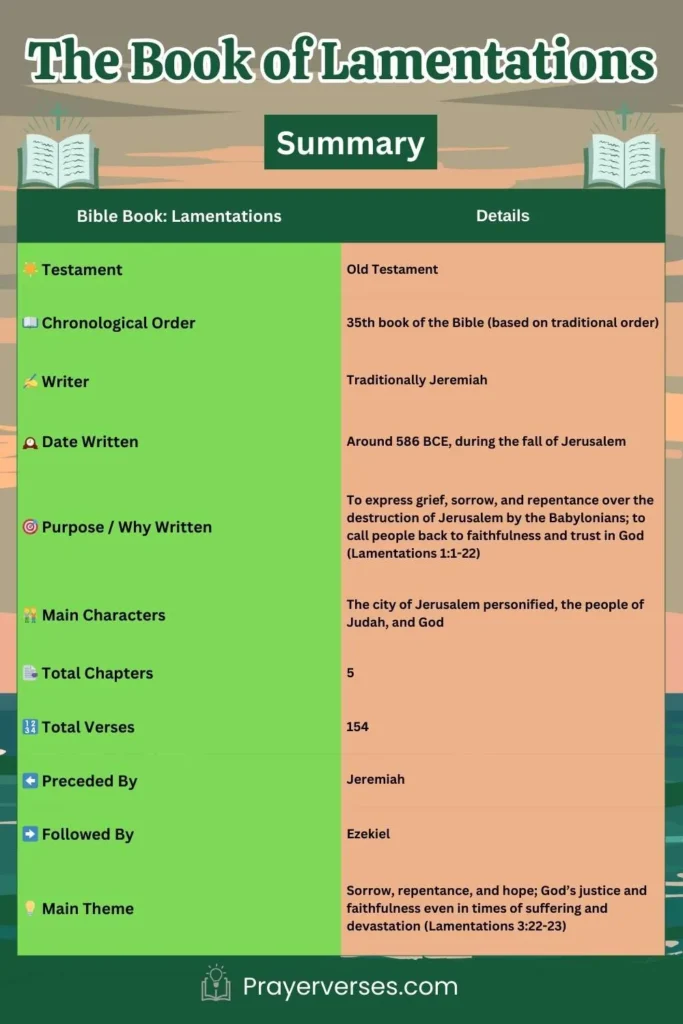
| Bible Book: Lamentations | Details |
|---|---|
| 🌟 Testament | Old Testament |
| 📖 Chronological Order | 35th book of the Bible (based on traditional order) |
| ✍️ Writer | Traditionally Jeremiah |
| 🕰️ Date Written | Around 586 BCE, during the fall of Jerusalem |
| 🎯 Purpose / Why Written | To express grief, sorrow, and repentance over the destruction of Jerusalem by the Babylonians; to call people back to faithfulness and trust in God (Lamentations 1:1-22) |
| 🧑🤝🧑 Main Characters | The city of Jerusalem personified, the people of Judah, and God |
| 📑 Total Chapters | 5 |
| 🔢 Total Verses | 154 |
| ⬅️ Preceded By | Jeremiah |
| ➡️ Followed By | Ezekiel |
| 💡 Main Theme | Sorrow, repentance, and hope; God’s justice and faithfulness even in times of suffering and devastation (Lamentations 3:22-23) |
What Is Lamentations About?
Lamentations is a collection of poems that describe the heartbreak of Jerusalem’s fall in 586 BC, as told in 2 Kings 25. The Babylonian army destroyed the city, leaving people homeless, hungry, and afraid. The writer gives a voice to this pain, showing how deeply the people suffered. For instance, the city is compared to a lonely widow in Lamentations 1:1, abandoned and grieving.
Each poem in the book explores a different side of this sorrow. Some verses describe starving children and ruined streets, while others talk about prayers that seem unanswered (Lamentations 3:8). The words are raw and honest, not hiding the people’s struggles. Yet, amidst the grief, there’s a spark of hope. The writer reminds us, “The steadfast love of the Lord never ceases; his mercies never come to an end” (Lamentations 3:22).
This mix of sadness and hope makes Lamentations powerful today. It shows that we can talk to God about everything, even when life feels broken. The book doesn’t rush to happy endings, giving space for real emotions. It’s a guide for anyone who needs to express pain while still trusting in God’s love.
Structure of the Book
Lamentations is carefully crafted, even though its words feel like a cry from the heart. The first four chapters are written as acrostics in Hebrew, where each verse begins with the next letter of the Hebrew alphabet. This structure shows that the pain is complete, covering everything from A to Z. It’s like the writer is organizing the chaos of grief into poetry.

The fifth chapter breaks this pattern. It still has 22 verses, matching the Hebrew alphabet, but it’s not an acrostic, perhaps reflecting the disorder after Jerusalem’s fall. This change makes the poetry feel raw and real, as if the structure itself is breaking under the weight of sorrow. Yet, the careful design of the book keeps the emotions clear and focused.
Each chapter tells part of the story of Jerusalem’s pain. One focuses on the city’s loneliness, another on the people’s guilt, and another on hope in God (Lamentations 3:21–24). Together, they create a full picture of heartbreak and faith. This structure helps readers feel the depth of the sorrow while seeing the strength of belief that remains.
The poetry in Lamentations isn’t just for beauty—it carries the message forward. It guides readers through the emotions, making the book both organized and deeply moving. Even today, this structure helps us connect with the writer’s pain and hope. It shows that even in chaos, there’s a way to express what we feel.
Chapter-by-Chapter Breakdown
Chapter 1: The Lonely City
Chapter 1 paints a sad picture of Jerusalem as a lonely widow (Lamentations 1:1). Once a bustling city, it’s now empty, with its people suffering and no one to comfort them. The writer describes how the people’s sins led to this punishment, and their enemies mock them. Friends have betrayed them, and leaders are gone, leaving the city in despair.
The honesty in this chapter is striking. The writer admits, “The Lord is righteous,” even while describing the pain (Lamentations 1:18). This shows that the people know they turned away from God, but it doesn’t make the suffering easier. The chapter feels like a cry for help, raw and real. It invites readers to face their own struggles with the same honesty.
Chapter 2: God’s Anger
In Chapter 2, God’s anger is described like a storm that destroys everything (Lamentations 2:3–5). The temple is ruined, the streets are empty, and people are starving. The writer explains that this happened because the people ignored God for too long. Priests and prophets, who should have led well, have fallen, adding to the chaos.
Despite this, the chapter isn’t without hope. The writer urges the people to cry out to God, especially at night (Lamentations 2:19). This call to prayer shows that even in anger, God is still listening. The chapter balances the weight of punishment with the possibility of turning back to God. It’s a reminder that no matter how bad things get, we can still reach out.

Chapter 3: A Personal Cry and a Ray of Hope
Chapter 3 is the most personal and longest chapter, starting with the writer saying, “I am the man who has seen affliction” (Lamentations 3:1). He feels like God has turned against him, with his body and spirit crushed. Prayers seem blocked (Lamentations 3:8), and the pain feels endless. This raw honesty makes the chapter relatable to anyone who’s felt alone in their struggles.
Then, a shift happens. The writer recalls, “Great is your faithfulness,” and says, “The Lord is good to those who wait for him” (Lamentations 3:21–25). This hope shines like a light in the darkness. Even when everything feels broken, the writer trusts in God’s love. This chapter teaches that faith can coexist with pain, offering comfort to those who hurt.
Chapter 4: The Fall of a Nation
Chapter 4 compares Jerusalem’s past glory to its current misery. Rich people now beg, and honored priests are ignored (Lamentations 4:1–5). Children suffer without food, and the city’s leaders are blamed for leading people astray. The nation trusted other countries for help, but no one came, leaving them hopeless.
Yet, there’s a small sign of hope. The chapter ends by saying the punishment won’t last forever (Lamentations 4:22). This promise keeps the people looking forward, even in pain. The chapter shows how far Jerusalem fell but also points to God’s mercy. It’s a reminder that even in the worst times, God’s plan includes restoration.
Chapter 5: A Final Prayer
Chapter 5 is a heartfelt group prayer, beginning with, “Remember, O Lord, what has befallen us” (Lamentations 5:1). The people list their losses—land, joy, and freedom—describing a life turned upside down. They’re tired and broken, yet they still turn to God. This shows their faith hasn’t disappeared, even in despair.
The chapter ends with a tough question: “Have you utterly rejected us?” (Lamentations 5:22). There’s no clear answer, but the people still say, “You, O Lord, reign forever” (Lamentations 5:19). This mix of doubt and trust feels real. It shows that even when we don’t understand God’s ways, we can still pray and hold on.
Key Themes in Lamentations
One major theme in Lamentations is grief. The writer doesn’t hide the pain of loss, describing it openly in every chapter. This honesty helps readers feel okay about their own sadness. The book also highlights God’s justice, as the people admit their sins led to their suffering (Lamentations 1:18). This shows that actions have consequences, but God is fair.

Another theme is hope in God’s mercy. Even in the darkest moments, the writer remembers, “The steadfast love of the Lord never ceases” (Lamentations 3:22–23). These words inspire people today, often appearing in songs and sermons. The book encourages honest prayer, showing it’s okay to cry and ask hard questions. God listens, even when words are messy.
Finally, Lamentations teaches patience. Healing takes time, and the book doesn’t rush to fix everything. It shows that faith can survive even the worst disasters. This balance of sorrow and trust makes the book a guide for tough times. It reminds us to hold on to God, no matter what.
Why Lamentations Still Matters Today
Lamentations speaks to people today because it shows how to handle deep loss without pretending everything is okay. Written thousands of years ago, its words still feel fresh and real. When life hurts—whether from losing a loved one or facing a big change—this book offers words for those feelings. It’s like a friend who understands your pain.
The book also teaches that we can bring our brokenness to God. Its honest prayers show that God listens, even when we’re angry or sad. This makes Lamentations a comfort for anyone who feels alone in their struggles. It gives permission to cry and ask God for help, no matter how messy the words are.
Churches often read Lamentations during solemn times, like Good Friday, to reflect on suffering. Its poetry helps people process grief while pointing to God’s presence. Even when answers don’t come, the book reminds us that God is still there. Lamentations helps us face pain with faith, trusting that God hears every cry.
FAQs
1. What is the summary of the book of Lamentations?
The Book of Lamentations is a collection of poetic laments over the destruction of Jerusalem and the suffering of its people. It reflects a time of great loss and grief, capturing the emotional and spiritual pain that followed the Babylonian conquest in 586 B.C. Each chapter presents a heartfelt expression of sorrow, portraying the devastation of the city, the hardships endured by its citizens, and the sense of abandonment by God.
Despite the sadness, the book also emphasizes the faithfulness and justice of God. The author frequently acknowledges that the calamity came as a result of sin and disobedience, reminding readers of the importance of repentance. For example, Lamentations 3:22-23 says, “The steadfast love of the Lord never ceases; His mercies never come to an end; they are new every morning.” This verse introduces a theme of hope even amid suffering.

The structure of Lamentations uses acrostic poems, particularly in chapters 1, 2, and 4, where each verse begins with a consecutive letter of the Hebrew alphabet. This poetic design strengthens the expression of grief, showing careful craftsmanship and reflecting a deep sense of order even in times of chaos. The book as a whole teaches about mourning, reflection, and the search for God’s mercy in moments of hardship.
2. Who was the book of Lamentations written to?
The primary audience of Lamentations was the people of Judah, especially those who survived the Babylonian siege and the destruction of Jerusalem. The book speaks directly to citizens who had lost their homes, their temple, and their sense of national identity. It conveys both personal and communal grief, as the laments describe individual suffering alongside the collective pain of a fallen city.
Besides addressing the survivors, Lamentations also speaks to future generations of believers. By recording these events and emotions, the book provides a historical and spiritual warning about the consequences of sin, disobedience, and turning away from God. It calls readers to reflect on their own actions and encourages reliance on God’s mercy.
The book indirectly addresses God Himself, as many of the poems are prayers or cries to the Lord. These expressions show that while the people felt abandoned, they were still seeking God’s guidance, forgiveness, and restoration. Lamentations 5:19-22 illustrates this dialogue: “You, O Lord, reign forever; Your throne endures to all generations. Why do You forget us forever?” This shows both sorrow and the desire for divine intervention.
3. Is the book of Lamentations in the Catholic Bible?
Yes, the Book of Lamentations is included in the Catholic Bible. It is part of the Old Testament and is traditionally placed after the Book of Jeremiah, which makes sense historically because Lamentations is closely connected to the events surrounding Jerusalem’s fall. The book is considered canonical and is used in liturgy and personal devotion within the Catholic tradition.
Catholic scholars often emphasize the moral and spiritual lessons in Lamentations, highlighting how it encourages repentance, humility, and trust in God’s mercy. The vivid descriptions of suffering serve as a reminder that even in the worst circumstances, God’s faithfulness endures. Lamentations is read in specific seasons of reflection, such as during Lent or other times of penance.
The book also holds significance in other Christian traditions, including Protestant and Orthodox Bibles, although placement may vary. Its timeless message of mourning, hope, and reliance on God’s steadfast love resonates across denominations, making it a profound and instructive part of Scripture.

4. What is the famous verse in Lamentations?
One of the most famous verses in Lamentations is Lamentations 3:22-23: “The steadfast love of the Lord never ceases; His mercies never come to an end; they are new every morning.” This verse stands out because it brings hope in the midst of intense sorrow. Even though the book depicts destruction and grief, this verse reassures readers that God’s love and mercy remain constant.
Another notable verse is Lamentations 3:31-32: “For the Lord will not cast off forever, but though He causes grief, He will have compassion according to the abundance of His steadfast love.” This verse highlights the balance between God’s justice and His compassion. While suffering is acknowledged as a consequence of sin, God’s mercy is still available to those who seek Him.
These verses are frequently cited in devotionals, sermons, and Bible studies because they provide a powerful reminder of God’s faithfulness. They encourage believers to maintain hope and trust, even during personal trials or national calamities, showing that God’s love can bring restoration and comfort.
5. Who wrote the Book of Lamentations in the Bible and when?
The author of Lamentations is traditionally believed to be the prophet Jeremiah. Known as the “weeping prophet,” Jeremiah witnessed the destruction of Jerusalem and the suffering of its people, making him a fitting voice for this collection of laments. Although the text itself does not explicitly name its author, Jewish and Christian traditions attribute the book to him based on historical context and thematic similarities with the Book of Jeremiah.
The writing of Lamentations likely occurred shortly after the fall of Jerusalem in 586 B.C., during the Babylonian exile. This timing is evident from the vivid descriptions of the city’s devastation, the loss of the temple, and the suffering of the inhabitants. Jeremiah’s experience as a prophet during this period gives the book authenticity and emotional depth.
The book reflects a deep theological perspective, as it combines historical narrative with poetic lamentation. Jeremiah’s focus is not only on the tragedy itself but also on God’s justice, mercy, and the call for repentance. Through the author’s words, readers are reminded that even in the darkest times, God’s love and compassion provide hope, encouraging trust in His guidance and restoration (Lamentations 1:12; 3:37-38).
Further Reading
- Joshua Bible Book: Key Stories, Meaning, and Chapter Summary
- The Book of Judges – Stories of Courage, Chaos and God’s Mercy
- The Bible Book of Lamentations: Meaning, Chapters and Summary
- The Book of Leviticus: Laws, Sacrifices, and Holiness in the Bible
- Malachi in the Bible: Prophecies, Warnings and Messages