
The Bible Book of Nahum: A Short Yet Powerful Prophetic Book
A clear explanation of the Book of Nahum—its message, structure, and meaning—in easy words for any Bible reader.
Introduction
The Book of Nahum is a tiny part of the Old Testament, with only three chapters. Yet, its words carry a big punch, focusing on God’s judgment against Nineveh, the capital of Assyria. This book shows how God stands up for His people when they face cruelty. For the people of Judah, who were hurting under Assyrian rule, Nahum’s message was like a promise that God sees their pain.
Nahum’s name means “comfort”, but the book mostly talks about punishment for Nineveh’s evil actions. Assyria was a super strong empire, but Nahum warned that no one can stay powerful forever if they act wrongly. His words gave hope to Judah, showing that God would act to protect them. The book balances a serious warning with a comforting promise for those who trust in God.
This prophecy was written when Assyria seemed unbeatable, probably between 650–620 BC. Nahum’s message was clear: God’s justice would come, no matter how mighty Nineveh seemed. Even kids can understand that God cares about what’s right and will step in when the time is right. This makes Nahum a book about hope and justice, even in tough times.
Summary
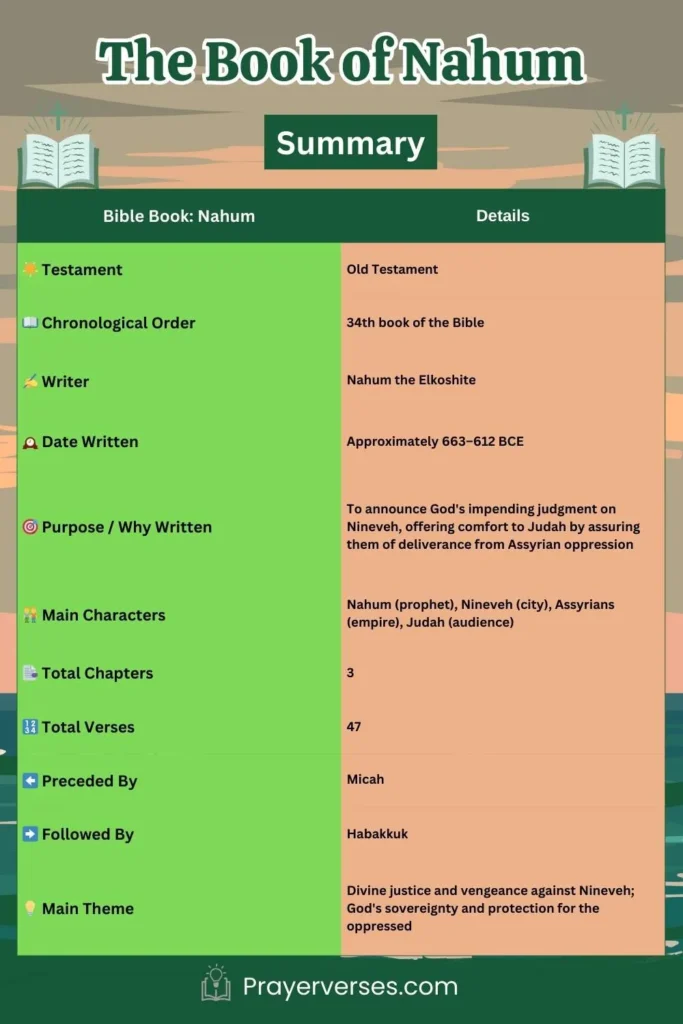
| Bible Book: Nahum | Details |
|---|---|
| 🌟 Testament | Old Testament |
| 📖 Chronological Order | 34th book of the Bible |
| ✍️ Writer | Nahum the Elkoshite |
| 🕰️ Date Written | Approximately 663–612 BCE |
| 🎯 Purpose / Why Written | To announce God’s impending judgment on Nineveh, offering comfort to Judah by assuring them of deliverance from Assyrian oppression |
| 🧑🤝🧑 Main Characters | Nahum (prophet), Nineveh (city), Assyrians (empire), Judah (audience) |
| 📑 Total Chapters | 3 |
| 🔢 Total Verses | 47 |
| ⬅️ Preceded By | Micah |
| ➡️ Followed By | Habakkuk |
| 💡 Main Theme | Divine justice and vengeance against Nineveh; God’s sovereignty and protection for the oppressed |
Background and Purpose
The Book of Nahum was written around 650–620 BC, just before Nineveh fell in 612 BC. Long ago, the people of Nineveh had listened to the prophet Jonah and turned away from their bad ways (Jonah 3:5). However, by Nahum’s time, they were back to being cruel and arrogant, hurting smaller nations like Judah. The Assyrians had already conquered the northern kingdom of Israel (2 Kings 17:6), and Judah was scared they’d be next.
Unlike other prophets who called people to change their ways, Nahum’s job was to announce God’s judgment. God had been patient with Nineveh, but their time was up because they kept doing wrong. This wasn’t about giving them another chance—it was about letting Judah know that God would stop their enemies. The message was meant to comfort Judah, showing that God was stronger than the mighty Assyrians.
For the people of Judah, Nahum’s words were like a light in a dark time. They were suffering, and God used Nahum to say, “I see what’s happening, and I’ll take care of it.” This shows that God doesn’t ignore evil, even if it takes time for His plans to happen. The book’s purpose was to give hope to God’s people while warning Nineveh of their coming downfall.
Chapter 1 – God’s Power and Character
Nahum starts by showing how strong and serious God is. In Nahum 1:2, it says, “The Lord is a jealous and avenging God; the Lord takes vengeance and is filled with wrath.” This means God protects what’s right and doesn’t let evil go unpunished. He’s not mean or out of control—He’s fair and powerful.

The next verse, Nahum 1:3, says, “The Lord is slow to anger but great in power.” This tells us God doesn’t rush to punish, but He won’t ignore sin forever. He controls everything, like storms, mountains, and seas (Nahum 1:3-6), which shows His judgment is unstoppable. For kids, think of God like a superhero who’s patient but steps in when things get really bad.
Then, in Nahum 1:7, there’s good news: “The Lord is good, a refuge in times of trouble. He cares for those who trust in Him.” While God judges the wicked, He protects those who follow Him. The chapter ends with a promise that Nineveh will be destroyed and never rise again (Nahum 1:14). This mix of power and care shows both sides of God’s character.
This chapter helps us see that God is in charge of everything. He’s strong enough to stop any enemy, but He’s also kind to those who trust Him. For Judah, this was a reminder that God hadn’t forgotten them. Even today, it shows that God is always watching and will act when the time is right.
Chapter 2 – The Fall of Nineveh
Nahum 2 is like an action movie, describing Nineveh’s destruction in vivid detail. It starts with a warning: “An attacker advances against you, Nineveh” (Nahum 2:1). The chapter talks about soldiers, chariots, and the chaos of battle, showing that God planned this judgment. It’s not random—it’s what Nineveh deserved for their cruelty.
In Nahum 2:6, it says, “The river gates are thrown open and the palace collapses.” Historians think a flood helped destroy Nineveh, which matches Nahum’s words perfectly. This shows how God can use nature to carry out His plans. The people of Nineveh would try to run away in fear (Nahum 2:8), but their city would be left empty (Nahum 2:9-10).
This wasn’t just a small defeat—Nineveh’s fall was total. Their treasures were taken, and their power was gone forever. For Judah, this was great news because it meant their scary enemy wouldn’t bother them anymore. Nahum’s words were a promise that God would make things right.
The chapter shows that no one can escape God’s judgment if they keep doing wrong. It also gave Judah hope that their suffering wouldn’t last forever. Even though Nineveh seemed super strong, God was stronger. This part of the book reminds us that God always keeps His promises.
Chapter 3 – Woe to the City of Blood
Nahum 3 starts with a bold statement: “Woe to the city of blood” (Nahum 3:1). Nineveh had hurt a lot of people to gain power, and now they’d face the consequences. The prophet describes the sounds of whips, wheels, and horses (Nahum 3:2-3), painting a picture of a city under attack. Their shame would be out in the open for everyone to see.
In Nahum 3:5, God says, “I am against you,” which is a super serious warning. When God is against someone, no army or strength can save them. Nahum compares Nineveh to Thebes, another big city that fell despite its power (Nahum 3:8-10). If Thebes couldn’t stand, Nineveh didn’t have a chance either.
The chapter ends by saying Nineveh’s leaders would scatter, and no one would feel sorry for them (Nahum 3:18-19). Their cruelty had caught up with them, and their story was over. This was a clear message that God doesn’t let evil go on forever. For Judah, it was a reminder that God was on their side.
This part of Nahum shows that God sees everything, even the worst things people do. It also shows that no one is too big to face God’s judgment. For kids, it’s like knowing that a bully will eventually face consequences. The chapter gives hope that God will take care of those who are hurting.
Message and Meaning Today
Even though Nahum is about something that happened long ago, its message still speaks to us today. The story of Nineveh shows that God sees injustice, and He won’t let it go on forever. Sometimes, it feels like bad people get away with everything, but Nahum reminds us that God has a plan. His timing is perfect, even if we don’t see it right away.
The book also shows that God is both powerful and good. He takes care of people who are weak or hurting, like Judah was back then. At the same time, He deals with those who misuse their strength, like the Assyrians did. This balance is a big theme in the Bible and helps us trust God.
When life feels unfair, Nahum’s words can give us confidence. God keeps track of what’s happening, and He’ll bring justice when the time is right. For people who trust Him, this brings peace, even in tough situations. The book encourages us to keep believing in God’s goodness, no matter what.

This message isn’t just for grown-ups—it’s for everyone. Kids can learn that God is like a parent who watches over them and steps in when things go wrong. Nahum’s story reminds us to stay patient and trust that God is working, even when it’s hard to see.
Final Thoughts
The Book of Nahum is short, but its message is clear and strong. It warns those who do wrong that God’s judgment is coming, while giving hope to those who are suffering. For Judah, it was a promise that their pain wouldn’t last forever. For us, it’s a reminder that God sees everything.
Nahum’s words came true when Nineveh fell, proving that God’s word is reliable. Studying this book helps us trust that God is always at work, even when we don’t understand His plans. It shows that no one, not even a mighty city like Nineveh, can stand against God.
If you ever feel like bad things are winning or no one notices your struggles, Nahum says God knows. He’s watching, and He’ll act in His perfect timing. This book encourages us to hold on to hope and trust in God’s power and goodness.
FAQs
1. What is the summary of the book of Nahum?
The Book of Nahum is a short prophetic book in the Old Testament, consisting of three chapters. It focuses mainly on the judgment of Nineveh, the capital of Assyria, which had been a powerful enemy of Israel. Nahum paints a vivid picture of God’s justice, showing that the wicked cannot escape His punishment.
The first chapter emphasizes God’s power and holiness. It describes Him as a refuge for those who trust in Him while being a force of destruction against the wicked. The imagery in this chapter portrays storms, darkness, and floods, demonstrating the intensity of God’s judgment.
Chapters two and three specifically target Nineveh’s fall. They describe the siege, plundering, and eventual destruction of the city because of its cruelty and idolatry. Nahum’s words reassure the Israelites that their enemies will face justice and that God’s sovereignty is absolute (Nahum 1:7-8).

2. What is the main message of the book of Nahum?
The central message of Nahum is that God judges nations and punishes wickedness, but He also protects and comforts His people. The book encourages believers to trust in God’s justice, reminding them that no evil act goes unnoticed. God is depicted as patient yet powerful, ensuring that oppressors are held accountable.
Nahum demonstrates that sin has consequences. Nineveh had once received mercy under Jonah, yet it returned to violence and idolatry. The prophecy warns that repeated disobedience leads to destruction, emphasizing the importance of obedience to God’s law (Nahum 1:3).
At the same time, Nahum delivers a message of hope and reassurance to Israel. Even though they had suffered under Assyria’s oppression, the prophecy shows that God’s timing is perfect and that He will defend His people against injustice. This balance of judgment and comfort is a key theme throughout the book.
3. Where is the book of Nahum in the Bible?
The Book of Nahum is located in the Old Testament, among the twelve minor prophets. It follows the Book of Micah and precedes the Book of Habakkuk. Despite being brief, Nahum carries a powerful message that connects with the histories of Israel and Assyria.
The positioning of Nahum highlights the continuity of prophetic messages about justice and God’s sovereignty. Like other minor prophets, it focuses on both the moral and spiritual accountability of nations. Its placement emphasizes that God’s warnings are timely and directed toward specific historical events while remaining spiritually relevant today.
The book is often studied alongside Jonah, as both address Nineveh. While Jonah emphasizes God’s mercy, Nahum stresses His justice, providing a balanced understanding of God’s character (Nahum 1:2-3).
4. Who was Nahum in the Bible?
Nahum was a prophet from Elkosh, whose exact location is uncertain but likely in Judah. He is recognized as one of the minor prophets, delivering God’s message primarily to Israel concerning Nineveh. Nahum’s prophecy reflects both his deep knowledge of God and his awareness of the political situation in Assyria.

His role was to warn and encourage. While he condemned Nineveh’s cruelty, he offered reassurance to God’s people, showing that divine justice would prevail. Nahum’s writing is poetic and vivid, using imagery of storms, warfare, and divine wrath to convey God’s power (Nahum 1:6).
Even though little is known about his personal life, Nahum’s message has endured for thousands of years. He is remembered as a prophet who boldly declared God’s sovereignty, showing that oppression and evil cannot triumph over the Lord.
5. What is the famous verse from Nahum?
One of the most cited verses from Nahum is Nahum 1:7, which says: “The Lord is good, a stronghold in the day of trouble; He knows those who take refuge in Him.” This verse highlights God’s goodness and protection for those who trust Him. It reassures believers that even amid chaos, God remains a reliable refuge.
Another powerful verse is Nahum 1:3, emphasizing God’s justice: “The Lord is slow to anger but great in power, and will not leave the guilty unpunished.” This verse balances God’s mercy with His authority, showing that wickedness will ultimately face consequences.
These verses make Nahum meaningful for believers facing oppression or fear, reminding them that God’s justice and care are constant. They serve as both warning and comfort, reflecting the dual themes of judgment and hope that run through the book.
6. Who wrote the Book of Nahum in the Bible and when?
The Book of Nahum was written by the prophet Nahum, likely during the 7th century BCE. Scholars estimate that it was composed shortly before the fall of Nineveh in 612 BCE, making it a historical prophecy against Assyria. Nahum’s timing was significant because it provided encouragement to Judah after years of Assyrian oppression.
Nahum’s authorship is supported by the text itself, which identifies him as the messenger of God from Elkosh (Nahum 1:1). His prophecy focuses on the historical events surrounding the Assyrian empire, reflecting both his awareness of political realities and his commitment to divine truth.
The book’s writing demonstrates a blend of poetic language, vivid imagery, and historical insight, making it a compelling record of God’s justice. It reminds readers that God’s messages are often delivered in context but carry timeless spiritual lessons (Nahum 3:5-6).